What Auto Finance Companies Need to Watch at the Federal and State Levels
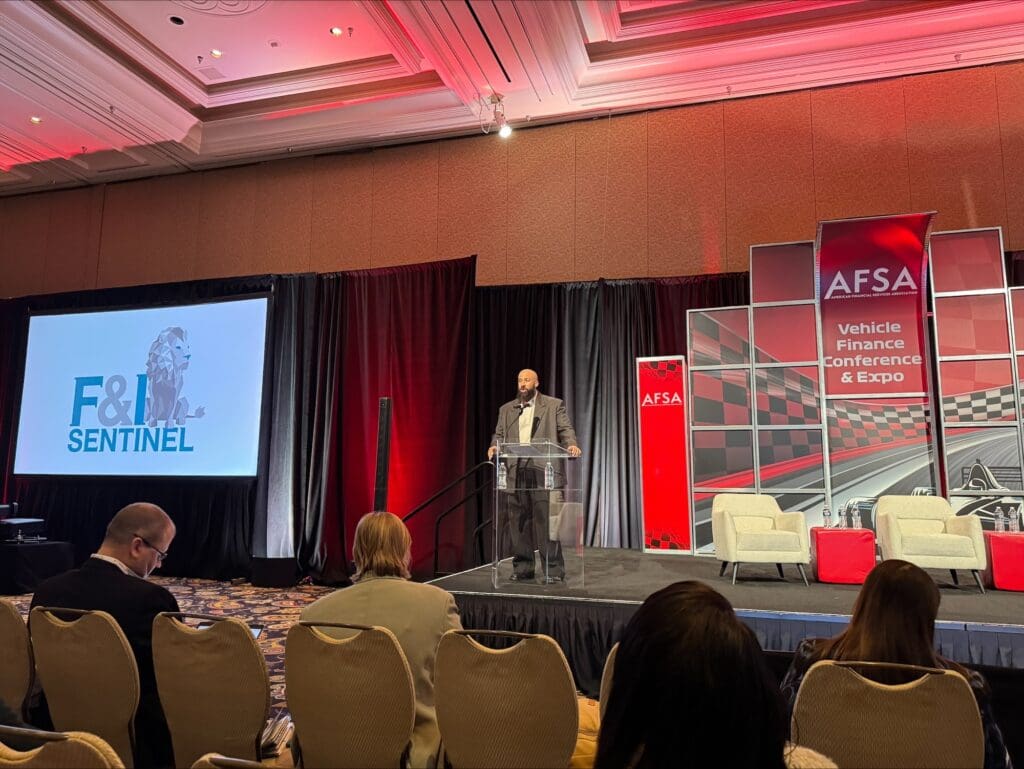
F&I Sentinel’s Keishawn Batts delivers the opening remarks for the popular Policy Roadmap 2026 session.
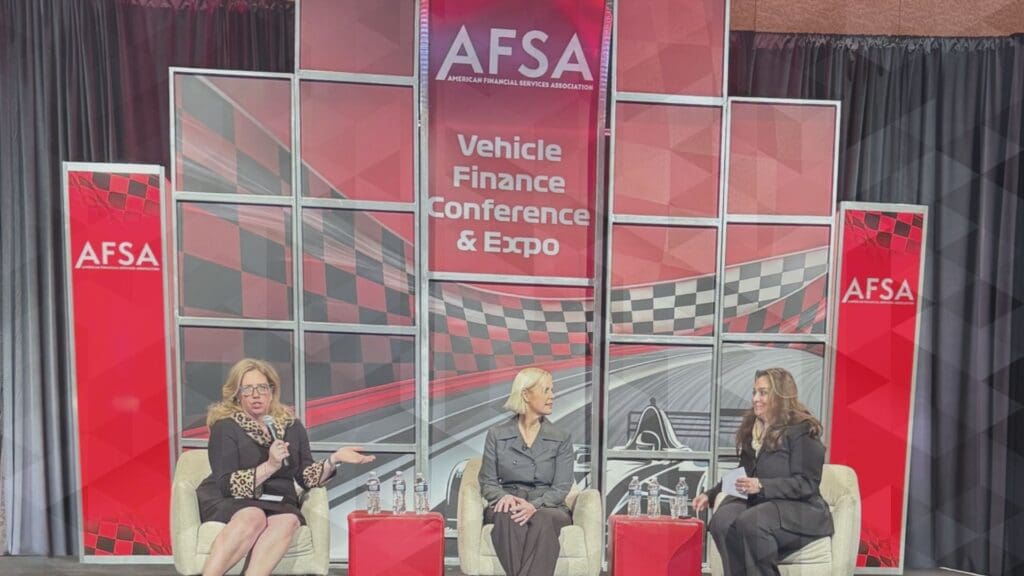
At the American Financial Services Association (AFSA) Vehicle Finance Conference, the “Policy Roadmap 2026” session delivered a clear message: the regulatory and political environment facing auto finance is becoming more fragmented, more state-driven, and more politically charged around affordability and fraud.
Below is a recap of the key themes from the discussion framed from the lens of where risk is forming, how it may evolve and why upstream controls are increasingly critical.
1. The Enforcement Center of Gravity Is Shifting Toward the States
Panelists described a growing shift in consumer protection leadership from the CFPB to state attorneys general. Over the past year, former CFPB leadership has encouraged states to take a more aggressive role in:
Expanding state-level unfair and abusive practice theories
Strengthening state level enforcement authority
Reducing procedural hurdles that make consumer cases harder to bring
Limiting tools viewed as restricting consumer remedies
This has not remained theoretical. Former CFPB officials have appeared alongside state attorneys general at major policy announcements and former CFPB staff have moved into state enforcement roles. The result is a diffusion of federal enforcement philosophy into state structures.
Why this matters for auto finance
Auto finance companies often inherit risk that originates at the dealership level. As states grow more assertive:
Point-of-sale practices receive more scrutiny
F&I product disclosures and structures draw more attention
Lenders are more likely to be pulled into actions based on upstream conduct
State enforcement may not replace federal risk, it layers on top of it.
2. “Affordability” Is the Dominant Political Theme
Affordability is now a central message across both political parties, influencing how policymakers frame financial services oversight.
At the federal level, discussion around a proposed 10% credit card rate cap triggered rapid industry response. While key congressional leaders signaled opposition, the debate itself reflects a broader political reality: policymakers feel pressure to show they are addressing the cost of credit.
At the state level, rate cap and fee restriction bills continue to appear, even in places where passage is unlikely. A few states are pursuing modernization approaches, but many proposals are framed in populist terms, often disconnected from credit access realities.
Why this matters for auto finance
Even unsuccessful bills can:
Shape state attorneys general enforcement narratives
Influence exam priorities
Create reputational and litigation risk
The political framing of credit as an affordability issue increases the likelihood that auto finance terms, pricing, and product structures will be examined through that lens.
3. Fraud and Credit Washing Are Rising on the Policy Agenda
Fraud, and particularly credit washing tied to abusive credit repair practices, was a major topic.
Lawmakers are considering bipartisan legislation to address high-volume, low-substantiation disputes filed by credit repair entities. These practices can temporarily remove negative tradelines, distorting underwriting decisions and contributing to higher losses.
Auto finance exposure
Auto transactions are a target in fraud schemes because they involve:
High-value assets
Fast-moving transactions
Opportunities for export or rapid resale
When credit data is manipulated, lenders may unknowingly underwrite higher-risk contracts. Policymakers are increasingly connecting these dynamics to broader consumer harm and system integrity concerns.
4. Industrial Loan Company (ILC) Charters Are Back in Debate
Recent FDIC approvals of new ILC charters (GM, Ford) have renewed opposition from some segments of the banking industry such as community banks. Legislation aimed at restricting or eliminating the ILC model reappears regularly, and this cycle is no different.
Relevance to auto finance
ILCs remain an important structure for certain auto-focused financing models. Even if legislation does not advance, recurring debate:
Raises political visibility
Encourages regulatory scrutiny
Creates strategic uncertainty for institutions using or considering the model
5. Tax Policy Implementation: Operational Reality vs. Legislative Design
Discussion also touched on IRS implementation of a recent auto-related interest deduction. The key issue is that real-world auto transactions do not align neatly with how tax policy is sometimes drafted.
Questions around negative equity and voluntary protection products like GAP waivers highlight the difficulty of applying simplified policy language to complex financing structures.
Why this matters
When regulators or tax authorities misunderstand how transactions are structured, compliance friction increases and lenders must spend time explaining, documenting, and defending standard industry practices.
6. Elections and Redistricting Add More Volatility
With midterms approaching and unusually active redistricting efforts underway in several states, panelists emphasized that political incentives will continue to shape policy.
Historically, midterm cycles increase pressure on lawmakers to demonstrate action on consumer cost issues. At the same time, numerous attorney general and governor races could influence state enforcement priorities.
Operational takeaway
Political cycles affect:
Which issues receive attention
How aggressively states pursue enforcement
What becomes a headline compliance risk
This environment favors institutions that can demonstrate consistent, well-documented controls regardless of shifting political narratives.
The Core Message for Auto Finance Companies
The AFSA session underscored a consistent theme: risk is moving upstream and outward.
Upstream, because more scrutiny is focused on origination, product structure, and dealer-level practices
Outward, because more states, and more types of state actors, are engaging in consumer finance oversight
For auto finance companies, that means compliance cannot be reactive or siloed. Controls must account for:
State-by-state variability
Evolving political narratives around affordability
Rising fraud pressure
Lifecycle risk that begins at origination and continues through servicing and cancellation
In this environment, the institutions best positioned to manage risk are those that can show that compliance intelligence is embedded at the point of sale and throughout the product lifecycle.